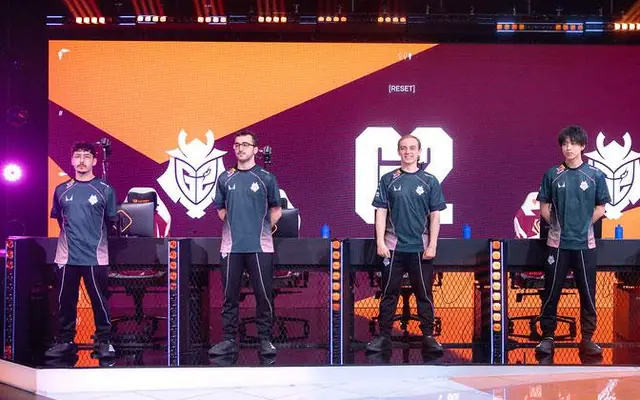
A pair of champions appears in an unexpected lane, the broadcast camera follows a vulnerable defender, and the discussion immediately becomes a verdict on the lane swap. For G2 viewers, the spectacle can obscure the actual strategic question: what did the team gain elsewhere, and what did it pay to create the scene on screen? A swap is not a single isolated movement. It is a redistribution of time, farm, protection, and pressure across the map.
The term also gets used for several different actions. An early attempt to avoid a matchup is not identical to a later rotation after a tower falls. Moving a support temporarily is not necessarily a full exchange of lane assignments. This guide separates those situations and provides a way to evaluate them without inventing G2's intentions. The examples are hypothetical. Because Riot has changed lane-related systems over time, the analysis begins by checking the rules of the actual patch rather than recycling an old slogan about what swaps always do.
Define which movement you are watching
Start with the time and the duration of the movement. Did both members of the bottom duo leave, or only the support? Is the carry collecting a different wave once, or expected to remain in that lane? Did the movement happen before standard lane matchups developed, after a recall, or after a structure was destroyed? These distinctions determine what is being traded.
In a hypothetical G2 sequence, the support might move toward mid while the bottom carry continues to farm safely. Calling that a full lane swap can distract from the actual purpose: temporary access to another part of the map. In another sequence, the duo may relocate together while the solo laner accepts a different assignment. That changes who receives resources and who needs protection. Write a plain description before applying a label. If you can explain who moved, for how long, and who replaced them, the strategic interpretation becomes much easier to test.
Check the patch before using historical explanations
Lane-swap incentives have not been static. Riot's Patch 25.05 notes described an intervention against early uneven lanes, and Patch 25.06 followed with adjustments. Those pages are valuable historical evidence that the developer has actively changed the trade-offs. They are not a reliable shortcut to the exact rules in a later match. A viewer who carries old penalty numbers into a new season can misread a perfectly ordinary rotation.
The 2026 documentation introduces a different context through role quests and lane-related incentives. Its relevance here is the general need to account for the assigned role and the value of remaining in a lane, not a claim that the launch values stayed unchanged all year. Before judging a specific professional game, establish its event patch and consult the corresponding notes. Avoid declaring a move illegal simply because it resembles a strategy targeted by an older system. Mechanical incentives and tournament rules are separate questions and require separate evidence.
Identify the matchup the team is trying to change
A lane assignment can influence which champions interact during their most vulnerable stage. A duo might prefer to avoid sustained pressure, create a safer farming route, or bring its range to a structure that another lane cannot threaten. However, the explanation should remain conditional until the available evidence supports it. The fact that a matchup looks uncomfortable does not prove it was the reason for the movement.
Imagine a hypothetical bottom duo that struggles to contest early waves against the opposing pair. Sending it elsewhere may relieve immediate pressure, but it can expose a teammate to a difficult assignment. Evaluate both sides of that exchange. Does the relocated duo gain meaningful access to resources, or merely avoid taking damage for a short time? Can the exposed solo laner collect experience without being forced away? A swap that protects one player while destroying another player's game may be a bad bargain even when the camera shows only the protected pair.
Follow the wave that was left behind
The most important cost of a movement often lives in the abandoned lane. Minions continue to arrive while players travel, recall, or set up a play elsewhere. If those resources disappear into a tower without anyone collecting them, the movement has a cost even when the destination produces an attractive highlight. The correct comparison is between complete map states, not between a visible success and an invisible nothing.
In a hypothetical swap, the duo gains pressure against one tower while the opponent collects a large uncontested wave on the other side. Whether that exchange is favorable depends on the scale of each reward, the champions receiving it, and the opportunities created next. Do not assume that every lost minion has the same strategic importance in every game. A small sacrifice can be justified by a decisive timing window. The key is to recognize the sacrifice and explain why the window could be worth it, rather than pretending movement is free.
Separate the support's freedom from the carry's needs
The bottom duo consists of two players with different resource priorities. A carry may need consistent access to minions, while a support may create value by helping teammates enter contested areas or by arriving first to a possible engagement. Their best paths can diverge temporarily. Treating them as one permanently attached unit can make a sensible movement appear inconsistent.
A hypothetical support rotation toward mid might be effective if the carry can remain safe and continue collecting resources. The same move becomes costly if it leaves the carry unable to approach the wave. The relevant question is what the carry can actually do during the support's absence. Watch opposing positions, the wave location, and the route back to safety. Then examine what the support achieves elsewhere. Merely appearing in another lane is not enough; the movement must create something that justifies the pressure it releases at home.
Look for the jungle route connecting both lanes
Lane assignments influence the jungler's work. Protecting an exposed lane, covering a possible dive, securing information, and maintaining a productive route can compete for the same time. A swap that appears to be a simple exchange between top and bottom may therefore reshape the entire team's schedule. The jungler can become the hidden player paying for a seemingly safe lane.
Suppose a hypothetical duo relocation forces its jungler to spend a long interval covering the opposite side. The team might still accept that cost if the protected champion reaches a useful threshold or if the opponents lose something comparable. But the cost should be acknowledged. Watch which camps are delayed, whether the opposing jungler gains freedom, and whether the covering player can leave without immediately exposing a teammate. A strong interpretation follows the supporting route behind the lane assignment. It does not judge the move solely from the health bars of the players who arrived first.
Read a tower trade as a change in access
Structures matter beyond the immediate reward for destroying them. Removing a tower can change how safely a team collects the next wave, how far it can move into nearby terrain, and which routes need protection. A swap that accelerates a structure can therefore be intended to alter the next phase of the map, not simply produce a favorable scoreboard moment.
In a hypothetical trade, both teams remove an outer structure, but the resulting positions may suit their compositions differently. One side may gain an easier route to its next objective, while the other creates a long lane it cannot safely manage. Ask which players will occupy the opened space and whether the team has the information needed to use it. A tower is not automatically valuable in isolation from what comes after it. The useful follow-up is to examine the first reset and wave assignment after the trade, when the proposed advantage must become an actual plan.
Distinguish a deliberate sacrifice from a failed recovery
Viewers often describe any struggling solo laner in a swap as weak-side sacrifice. Sometimes that is a reasonable interpretation, but the phrase can also hide a plan that did not work. A team may expect a player to lose some resources while preserving access to experience, or it may underestimate how completely the opponent can deny the lane. Those are different situations with different implications.
Use observable thresholds instead of presumed intent. Can the player reach the wave? Is a teammate in position to prevent an obvious collapse? Does the rest of the team collect a compensating advantage? In a hypothetical G2 example, accepting a modest disadvantage to accelerate a carry could be coherent. Accepting repeated losses without obtaining anything elsewhere requires a different explanation. Do not assume that every uncomfortable position was intended simply because professionals created it. A fair review allows for both calculated risk and miscalculation, while marking the team's private expectations as unknown.
Build a simple map ledger while watching
A practical viewing ledger needs only a few entries: movement, resources gained, resources conceded, protection required, and the next objective of the assignment. Record these for both teams over the same interval. This discourages the habit of celebrating one side's tower while forgetting the opponent's free farm or advantageous reset. It also helps identify when the initial swap has ended and a new decision has begun.
For a hypothetical review, pause before the movement and again after the next meaningful reset. Describe the difference without using the final match result as evidence. Which champion is stronger relative to its task? Which lane is easier to manage? Who must spend time responding? You do not need to invent exact gold figures if the broadcast does not provide them. Qualitative observations with clear limits are preferable to precise-looking numbers assembled from incomplete information. The purpose is to reconstruct the trade, not manufacture a verdict that looks statistical.
What makes a lane-swap explanation convincing
A convincing explanation connects the movement to a plausible objective, acknowledges its cost, and checks whether the resulting map supports the intended next action. It also leaves room for the opponent's response. A plan can be reasonable when chosen and still be countered. A plan can succeed because an opponent misses a response without becoming universally correct. Those distinctions make professional League more interesting, not less.
When G2 next changes a lane assignment, follow the player who leaves the camera as carefully as the players receiving attention. Check the event patch, identify the kind of rotation, and compare what both teams gain over the same period. The memorable dive or tower takedown may still be the exciting part. The fuller story is the network of waves, protection, travel, and timing that made it possible. Understanding that network turns a surprising move into a decision you can actually discuss.