The honor is a starting point for watching more closely
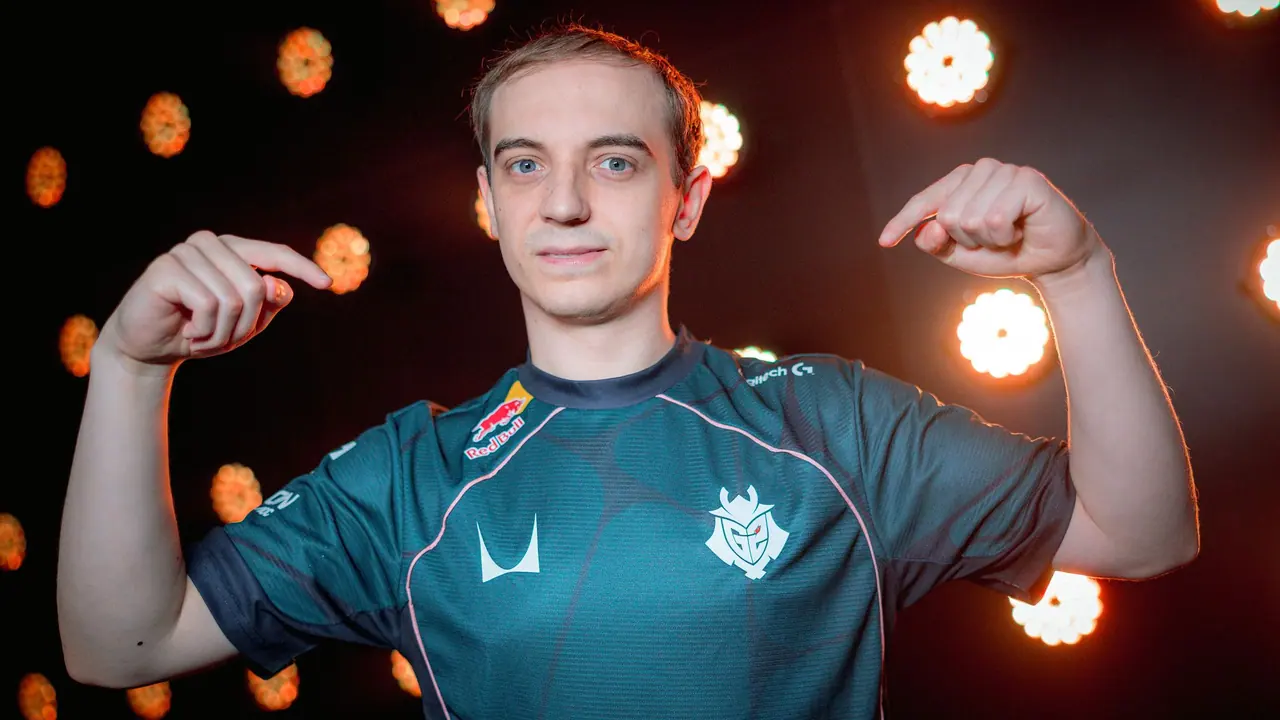
Riot announced Rasmus “Caps” Winther as a Hall of Legends inductee in August 2026, and its official news archive lists the Caps documentary in September. For G2 supporters, the recognition offers a natural reason to revisit how a mid laner influences a game. The obvious answer is individual brilliance. The more interesting answer includes many decisions that do not survive into a short highlight clip: when to move, when to stay, when to reveal a pick and when to let a teammate take the spotlight.
This guide is not a claim that every example below occurred in a particular Caps match. It is a practical framework for watching a celebrated mid laner without reducing his influence to kills or reputation. The examples are hypothetical and the questions are deliberately observable. If a decision cannot be checked against the game state, it should remain an interpretation. That approach respects both the player’s achievement and the audience’s need to distinguish a compelling story from a demonstrated tactical explanation.
Mid lane is a route through the map
The middle lane matters partly because it connects so many decisions. Access to nearby river entrances, movement toward either side and the ability to support a jungler all depend on what happens around its waves. A mid laner who can move first may change the opponent’s options without dealing damage to another champion. The opponent may need to delay an invade, retreat from a ward position or use a safer path. None of those responses necessarily appears in the player’s final kill score.
When watching Caps, therefore, ask what his lane position permits the team to do. Does the wave allow movement without a large resource loss? Is the opponent forced to choose between following and collecting minions? Is there enough information to make movement safe? These questions are more precise than saying that a player has “presence.” They connect presence to a mechanism. They also reveal why an apparently quiet minute can be strategically important even when the broadcast focuses elsewhere and no immediate fight develops.
Wave control creates decisions before mechanics resolve them
A wave is not only a source of gold. Its location and size shape the cost of leaving the lane. In a hypothetical situation, a mid laner who pushes at the right moment can accompany the jungler into river while the opponent remains occupied. Pushing at the wrong moment might instead create an exposed lane with no useful destination. The action looks similar from a distance, but the timing changes whether the team receives a real opportunity or simply places itself at risk.
To evaluate the decision, watch the next sequence rather than stopping at the shove. Was there a purchase timing, a vision action or a teammate’s movement that made the wave choice useful? Did the opponent lose something meaningful by responding? A strong player may be managing several of these conditions at once. Spectators do not need to know the exact team call to notice the relationship. They should, however, avoid inventing that call when the available footage only supports a narrower observation about positioning and timing.
Pressure can be valuable even when it is not cashed in
Threat changes behavior. A mid laner with a credible engage angle can make an opponent maintain more distance; a champion capable of moving quickly can make side lanes respect a missing player. The threat may produce safer farming, fewer contested wards or a delayed objective setup. It is tempting to call a play ineffective if it does not produce a kill. That misses the possibility that the opponent already paid a cost to avoid the threatened play. The difficult part is identifying that cost rather than assuming it.
A useful hypothetical example is a mid laner briefly leaving vision while a side lane has no escape spell. The opponent might retreat, allowing a teammate to collect a wave safely. No roam actually happens, yet the missing information changes the lane. When watching G2, look for the opponent’s response before crediting the pressure. Did someone back away, call support or surrender access? Observable reactions make the argument stronger. Without them, “he created pressure” risks becoming praise that cannot be distinguished from an ordinary movement.
Flexible picks are a team resource
A champion that can plausibly fill several roles can delay an opponent’s understanding of lane matchups. That uncertainty can affect bans, counterpicks and the order in which players reveal their intentions. However, a champion’s theoretical flexibility is not the same as a team’s demonstrated ability to use it. The player in each possible role needs a workable matchup and the rest of the composition must still function. Flexibility is valuable when it creates credible alternatives, not merely when a champion has appeared in another role somewhere before.
For Caps analysis, ask what a mid-lane option does to the whole draft. Does it preserve a later counterpick? Does it change the team’s damage profile? Does it help teammates secure comfortable assignments? These questions explain why drafting impact cannot always be measured through the selected player’s lane result. A pick can contribute by improving someone else’s position. Equally, an unusual pick deserves no automatic credit for creativity. Its value depends on whether the uncertainty or matchup advantage survives into a plan the team can execute.
Controlled aggression includes the decision not to go
The most shareable version of aggression is a forward movement that ends in an outplay. A more complete version includes the ability to recognize when a similar movement is unsupported. Teammate locations, available vision, defensive abilities and escape routes determine whether a risk is controlled. Calling every successful risk genius and every failed risk reckless is an outcome-based shortcut. The more useful question is what made the risk reasonable before the opponent responded and before spectators knew how the play would end.
Imagine, hypothetically, that a mid laner sees a low-health opponent but lacks information about the enemy support. Choosing not to chase can preserve the pressure already gained and protect the next objective setup. The resulting clip is less exciting than a solo kill, but the decision may be better. When evaluating Caps or any aggressive player, include the quiet refusals in your mental model. Otherwise the review rewards only visible action and overlooks the restraint required to keep a team’s strongest position intact.
Resource allocation reveals the role assigned to the player
A player’s numbers are affected by the job the composition asks him to perform. A mid laner assigned to hold a difficult lane and create space may produce a different statistical profile from one receiving repeated assistance and safe access to later waves. Neither assignment is inherently more valuable. The question is whether the team receives an appropriate return for the resources it spends. That return can be damage, map control, reliable initiation or protection for another carry whose timing matters more in that game.
For a hypothetical comparison, place the same player on a resource-hungry late-game champion in one match and a roaming facilitator in another. Expecting identical damage or farming patterns would misunderstand the assignment. Before using a number to support praise or criticism, identify what success would have looked like for that role. This does not mean statistics are useless. It means the relevant benchmark should follow the job. Without the job description, a precise-looking comparison can make two different tasks appear to be the same contest.
Team coordination limits individual explanations
A mid-lane opening often depends on another player arriving at the correct time. A jungler can make an otherwise dangerous trade safe; a support can turn a narrow escape route into a controlled corridor; a side laner can create pressure that prevents an opponent from following. Giving the mid laner all the credit is as incomplete as denying his contribution. The best explanations describe how the pieces interact. They make room for individual skill without treating teammates as background scenery around a star.
That is especially important when discussing a player with a celebrated career. Reputation can encourage viewers to interpret every coordinated move as the star’s private plan. Public evidence rarely supports that level of certainty. You can observe that Caps moved at a useful time or delivered an important ability without claiming to know who called the play. Avoiding invented leadership details does not diminish the achievement. It keeps the account grounded in what viewers can actually see and lets real interviews or documented team explanations supply additional context when available.
Learn from the decision rather than copying the champion
Fans who also play League can take more from professional mid-lane play than a build order. Ask what problem the player was solving. Was the aim to reach river first, deny a clean recall, survive a difficult matchup or create enough uncertainty for another lane? The same principle may apply to a different champion in an ordinary ranked game. Copying the exact pick while ignoring the supporting conditions can reproduce the appearance of the strategy without reproducing its reason for working.
A practical exercise is to pause before a movement and write two plausible alternatives. Stay for the wave, move with the jungler, recall or pressure a tower: each choice has a cost. Predict that cost before continuing the video. You will sometimes disagree with the professional decision, and you will sometimes discover information you missed. The aim is not to prove you would have played better. It is to understand which conditions make an option attractive, and to practice separating the decision process from the eventual result.
A legacy becomes clearer when the analysis stays specific
Hall of Legends recognition concerns a career, while tactical analysis concerns particular decisions. Both are meaningful, but they should not be used to replace one another. A career honor does not make every current play correct. A difficult game does not erase the achievements that led to the honor. Holding those scales apart allows a supporter to celebrate Caps while still asking demanding questions about lane decisions, preparation and the way G2 uses its mid-lane resources in a changing competitive environment.
The most rewarding way to revisit Caps is to look beyond the finishing blow. Follow the wave that made movement possible, the draft choice that protected a teammate and the moment a risk was declined because the map did not support it. Where the evidence is incomplete, say so. Where a hypothesis is useful, label it. This approach produces a richer appreciation than repeating a list of accolades, because it connects the reputation to decisions a viewer can learn to notice in the next G2 game.